
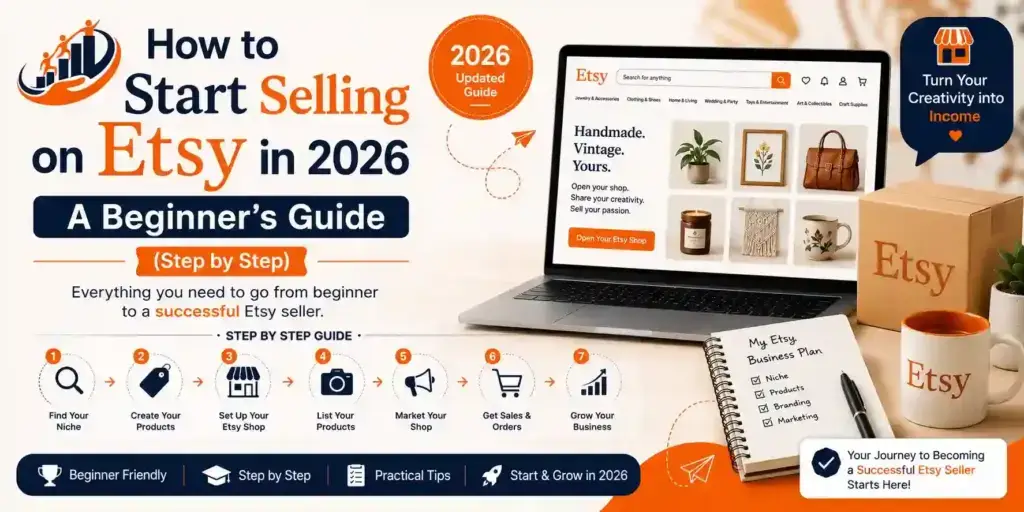
How to Start Selling on Etsy in 2026 — A Beginner's Guide (Step by Step)
So you’ve been wondering whether and how to start selling on Etsy in 2026. You’ve made or hand-crafted some beautiful items, and you’re good at graphic design, or maybe you don’t know whether your art can ever earn you money. Well, the great news is: there’s no barrier to entry, and no business degree or huge capital sum necessary to open an Etsy shop.
What you need is a product idea, a healthy amount of patience, and this very guide. We will take you step by step through starting to sell on Etsy from the start.
What sort of things can be sold on Etsy?
Before we can begin the selling process, it’s worth quickly getting this out of the way – because not everything is suited to an Etsy shop…
Three distinct categories are permitted on Etsy:
- Handmade – you craft or create the item yourself (e.g. Jewelry, candles, clothes, artwork etc).
- Vintage – any items sold need to be at least 20 years old.
- Digital – a file, which you design, is available to sell on an ongoing basis (e.g. Templates, printables, SVGs, planners, etc).
If you’re looking to sell an item that can fit into one of these criteria, you’re well and truly at the right place.
How to Start Selling on Etsy: A Step-by-Step Shop Setup Guide
Step 1: Create an Etsy Account
Head over to etsy.com and sign in. Or, if you’re new to Etsy and wondering how to start selling on Etsy, click “Register”. You can create an account with your email, Google account, or Facebook account.
Once you’re logged in, click on your profile icon and select “Sell on Etsy” to begin setting up your shop.
Step 2: Set up your Shop Preferences
Etsy will prompt you to answer a few simple questions:
- Shop Language (Select English for the best reach)
- Shop Country (Select India)
- Currency (You can keep this in USD as the main audience is from US/UK)
This part takes only two minutes, and you can always adjust these settings later on.
Step 3: Choose your Shop Name
This is where people can get really bogged down. Just pick something:
- Rememberable and easy to spell
- Relevant to what you’re selling (it doesn’t need to be hyper-literal)
- Between 4-20 characters long, no spaces allowed
Etsy will immediately let you know if your chosen name is taken. If it’s not available, don’t stress. Try adding a “studio”, “co”, or “shop” to the end of your desired name.
Step 4: Create your first listing
This is the most crucial part of setting up your Etsy shop. Your listing is what potential customers see and interact with, so make sure to give it your full attention.
A good listing includes:
- Clear and sharp photographs – preferably taken in natural light against a simple background. Multiple angles are always a good idea. Photo quality is the biggest deciding factor for customers whether or not to buy your item.
- A strong and keyword-rich title – think about the terms people would use to search for your product on Etsy. For instance, “Personalized Name Necklace – Gold Sterling Silver” is far more effective than “Pretty Necklace.”
- A detailed description – include information about size, materials used, exactly what’s in the package, and an estimated shipping time.
- A fair price – consider your time and effort, cost of materials, Etsy fees, and shipping costs when setting your prices. Don’t sell yourself short!
- Tags – You are allowed to use up to 13 tags per listing. Use all 13 and try to think of all possible searches that someone looking for your product might perform.
Step 5: Set up Payment and Billing
To start receiving payments for your sales, you need to connect Payoneer to your Etsy account. This is the only payment gateway for sellers in India. Etsy will deposit your money into your Payoneer account, and then you can transfer your funds to your local Indian bank account.
To pay for Etsy’s listing fees and other charges, you’ll need an international credit or debit card. Visa and Mastercard are usually accepted.
Step 6: Open your Shop!
Once you’ve finished setting up your payment and billing details, and have created your first listing, just hit “Open Shop”! You are now an official Etsy seller.
How To Sell On Etsy - Tips that Work
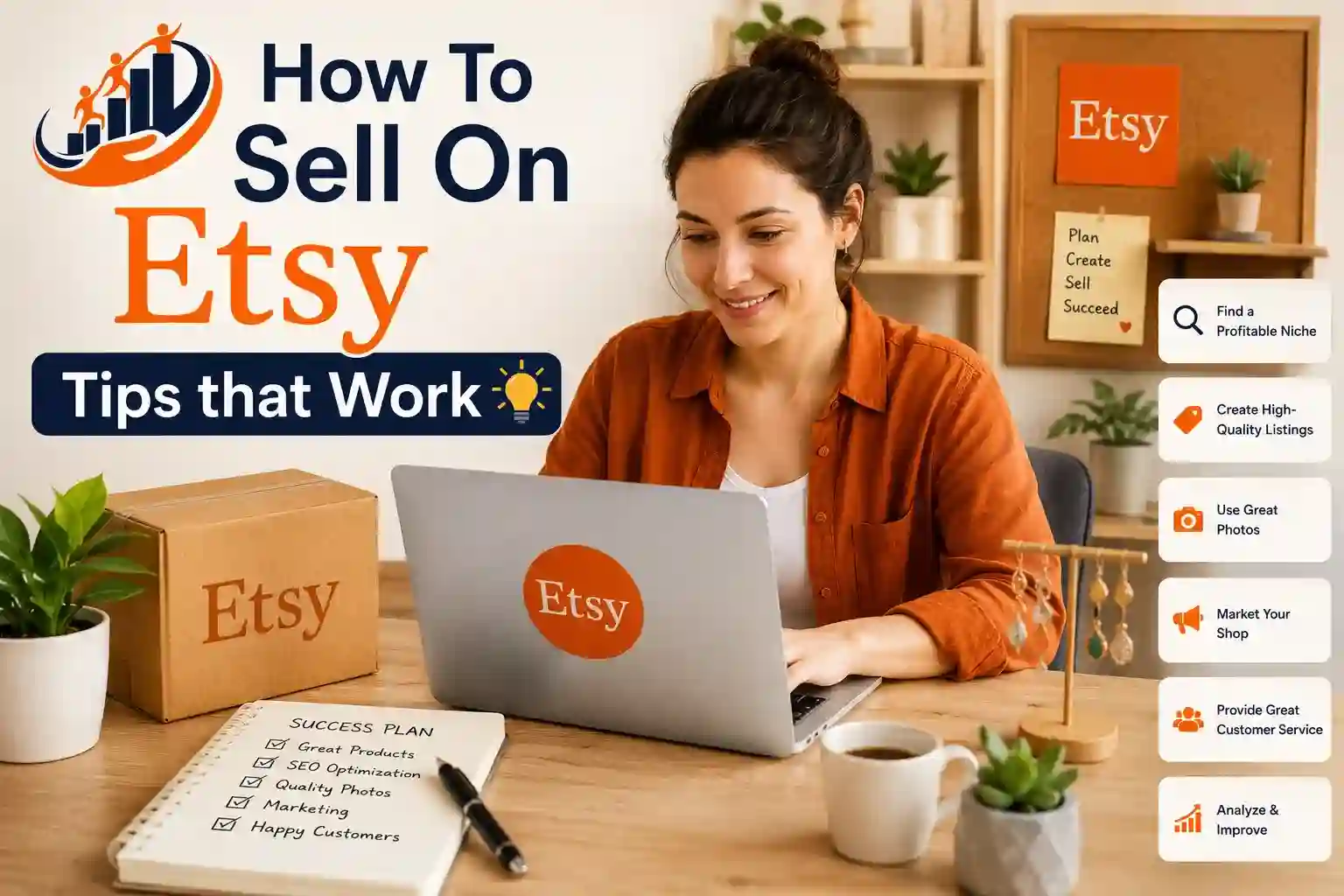
Just the store being set up doesn’t mean much when learning how to sell on Etsy. Selling actual items is a whole separate beast, though. These are tips that will determine whether you sink or swim:
Your Photos Mean Everything
Since buyers can’t physically touch or feel what you’re selling on Etsy, they rely entirely on the photos that you have to make purchasing decisions. Spend time and money on quality pictures. You don’t need a high-end camera for this; your phone will work perfectly with decent lighting.
Think Keywords from the buyer's, not the seller's perspective
Don’t titrate your listing by the name of your product. Instead, think about the words that the buyer will be searching for in their browser. Incorporate those terms into the title, description, and tags of your listing.
Price Appropriately
This is a problem for so many sellers new to Etsy; they will be in competition for cheaper products and underprice what they’re selling to compete. This strategy actually works against you; buyers will attribute the low prices to poor quality items. Figure out what your actual costs are and add a respectable profit margin to that.
Be consistent
The best sellers on Etsy are not always the most talented ones, they are generally the ones who don’t give up. Continuously add items to your shop and regularly update them. Likewise, quickly answer any questions that come to your inbox. Active Etsy shops perform better in search results.
If all of this feels like a lot to manage on your own, that’s completely understandable. A professional etsy account management service takes care of all of this for you — from listing optimization to customer replies — so you can stay focused on what you do best.
How Much does it Cost to Sell on Etsy?
Here is a breakdown of fees:
Fee | Amount |
Listing Fee | $0.20 per listing |
Transaction Fee | 6.5% of sale price |
Payment Processing | ~3% + $0.25 per order |
Opening a Shop | Free |
This makes the initial investment of opening an Etsy shop minimal; all fees are deducted from your sales, there is virtually no risk!
What is the best thing to sell on Etsy for a beginner?
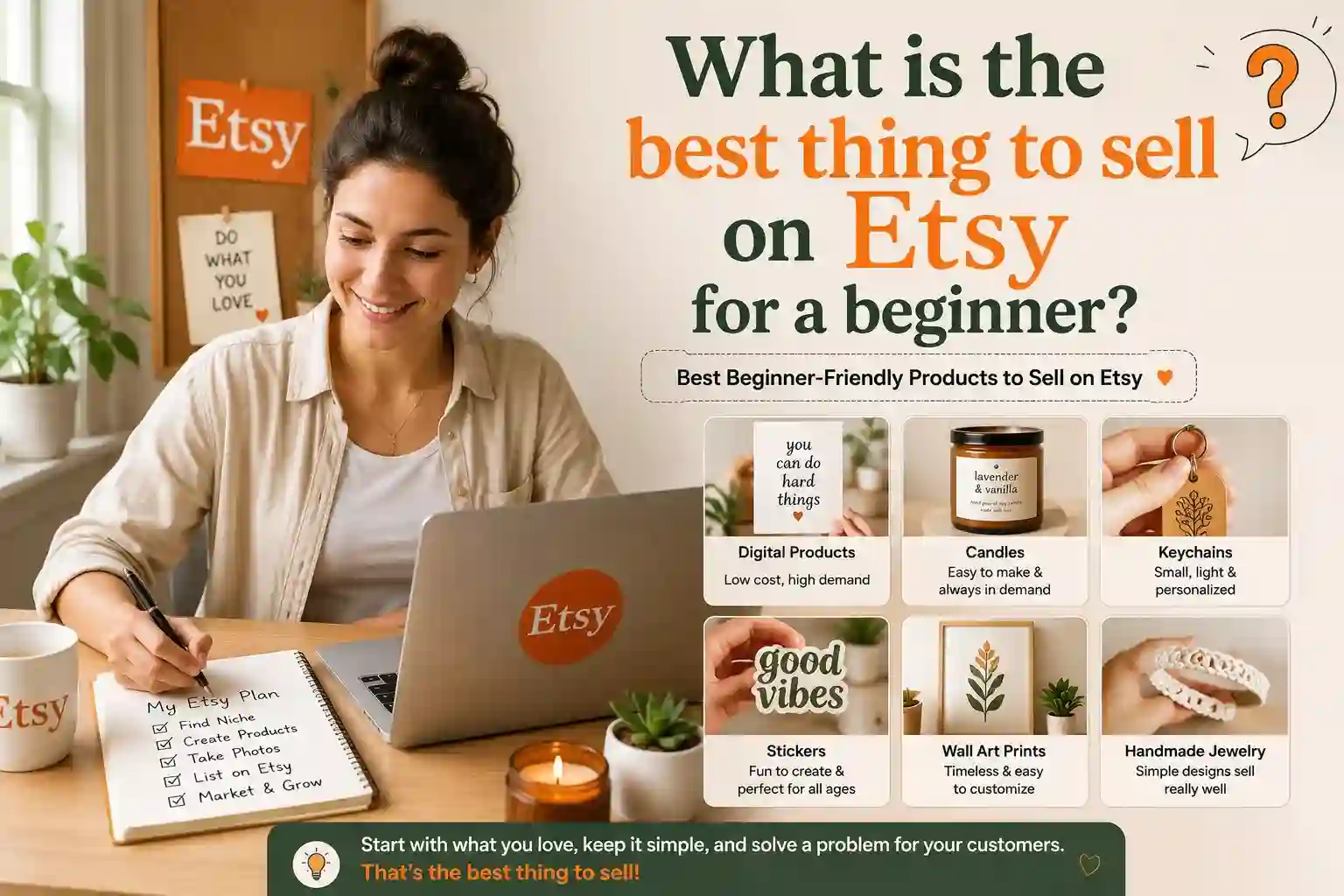
If you really don’t know where to begin with what to sell on Etsy, digital products are truly the best option – particularly for an Indian seller.
Reasons:
- It involves zero inventory. You create it once and can sell it a million times.
- No shipping – straight to customer’s inbox.
- It has high profit margins as the cost of creation is (near zero) once you’ve put in the work.
- It operates 24/7 and sales are always coming in while you’re asleep!
Common digital products include, Canva templates, wedding invites, resume templates, social media templates, printables and planners.
If you’re inclined toward physical products – jewelry, art prints, handmade decor etc. Then there’s always the option to sell these products, but that also involves management of inventory and shipping on top of everything.
Final thoughts
No large sums of money or complex business plans are required to begin selling on Etsy. Just one good product, decent photographs, and the willingness to click “publish”.
So many of the people who want to sell on Etsy someday never even get their shop open. Don’t be one of them. If you’re serious about learning how to start selling on etsy in 2026, opening a shop only takes a few hours to complete, and the sooner you open a shop, the sooner you’ll know what is working for you.